
Beyond the bathroom shelf: skin, breakfast and the bigger picture
Skin health is never just a surface story.
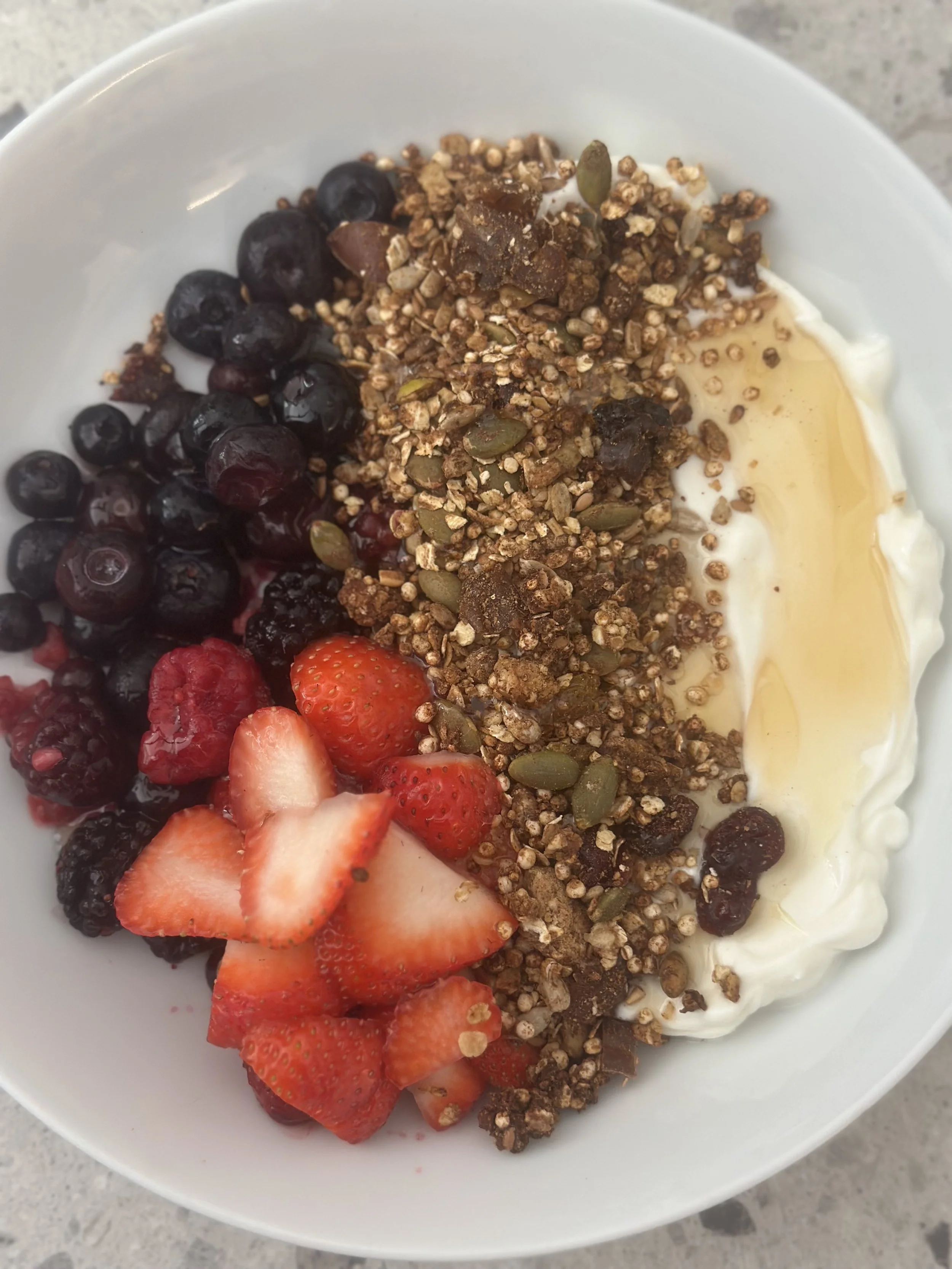
This is one of my favourite breakfasts for nourishing the skin from within: a granola bowl rich in protein, healthy fats, fibre and antioxidants to support calmer, stronger, more resilient skin.
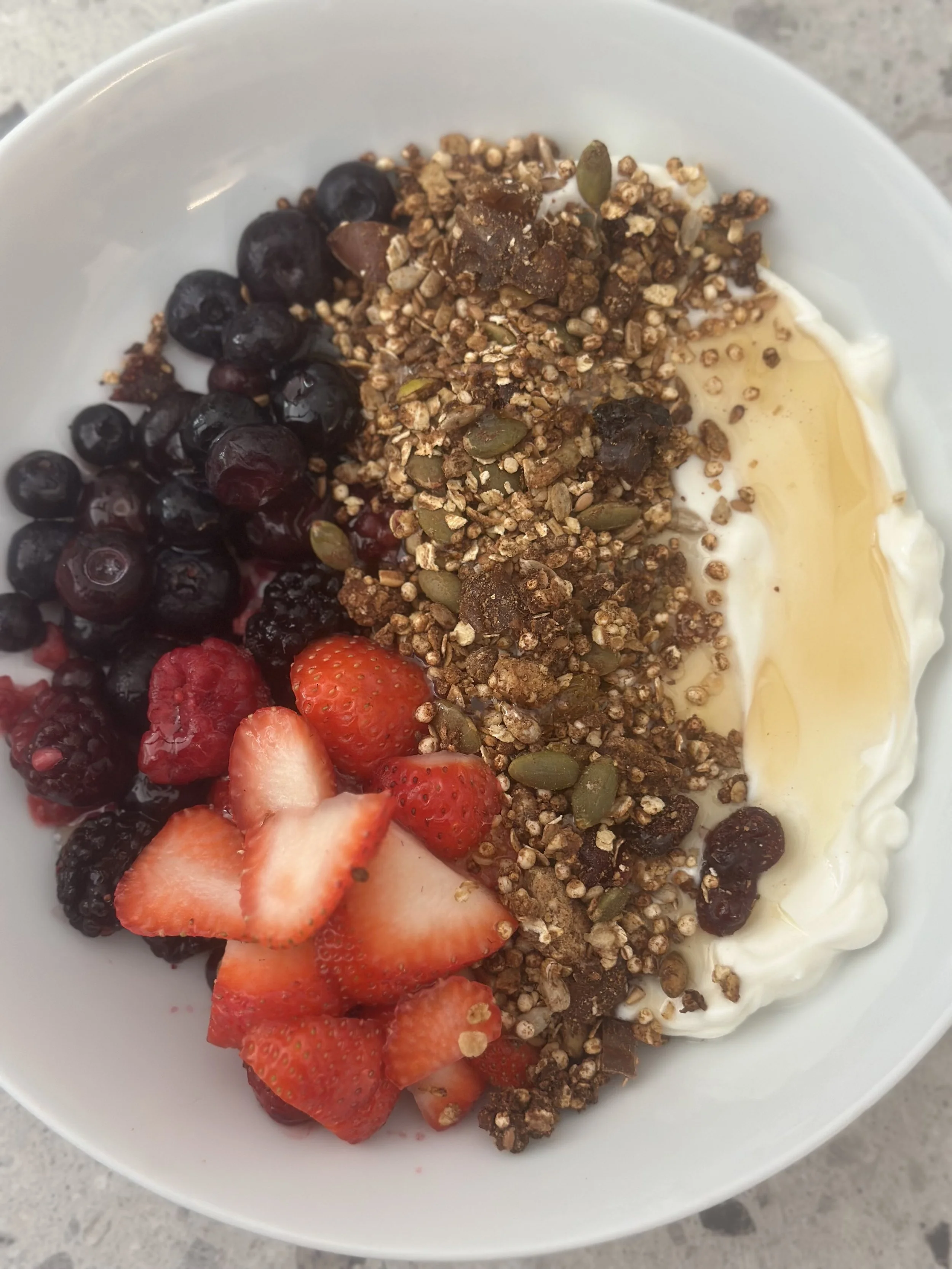
DELICIOUS and Nutritious! Skin-Healthy Granola
There’s an awful lot of chat about what to put on the skin.
Which serum to choose., Which active to use and when, whether your moisturiser is rich enough, calming enough, clever enough. Whether you need more hydration, more exfoliation, more glow, more collagen support. natural….synthetic….fragranced…unfragranced. the list is endless.
and of course, All of that has its place. I have made a career out of a passion for skincare. I work with it every day. I see how much the right products, the right touch and the right treatment can support skin that feels tired, reactive, dry, dull or simply not quite itself.
But skin cells do not run on skincare alone.
They run on protein, fats, antioxidants, minerals, hydration and energy. They run on the raw materials we give them every day to repair, protect, strengthen and renew. They are influenced by stress, hormones, sleep, blood sugar, inflammation, gut health and the pace at which we move through life.
In other words: skin health is never just a surface story.
SO many of my clients and friends comment that they are noticing their complexion starting to feel more dull, depleted, reactive or a little less resilient than it once did, My advice, along with looking at routine, is always to look beyond the bathroom shelf.
This is not about being restrictive or joyless about our products, because for consistency (the key to skin health) you need to love what you’re doing.
I just think we need to be approaching skin in a more joined up way.
This granola bowl is one of my favourite examples of that.
It is easy, genuinely delicious and packed with the kind of nutrients that support skin barrier function, collagen production, antioxidant defence and overall skin resilience.
It is not a miracle breakfast. It is not a shortcut to perfect skin. It is simply a nourishing, balanced way to feed the body and, in turn, give the skin more of what it needs to function well.
My skin-supportive granola bowl
For the granola
250g rolled oats
80g puffed quinoa
80g pumpkin seeds
80g sunflower seeds
60g walnuts, roughly chopped
60g pecans, roughly chopped
60g almonds, roughly chopped
2 tbsp chia seeds
2 tbsp ground flaxseed
1½ tsp cinnamon
120g peanut butter
3 tbsp honey
3 tbsp maple syrup
100g dates, chopped
80g sultanas
60g dried cranberries
To serve
200g Greek yoghurt
50–60g granola
a generous handful of mixed berries: strawberries, raspberries, blueberries and blackberries
Method
Heat the oven to 160°C fan or pop it in the Air Fryer. (top tip, when time is super tight and you haven’t got anything for breakfast - you can gently pan-toast this too!)
In a large bowl, combine the oats, puffed quinoa, pumpkin seeds, sunflower seeds, walnuts, pecans, almonds, chia seeds, flaxseed and cinnamon.
Gently warm the peanut butter, honey and maple syrup in a small pan until loosened and easy to stir.
Pour the warm mixture over the dry ingredients and mix well until everything is evenly coated.
Spread across one or two lined baking trays.
Bake for 20–25 minutes, stirring once or twice, until lightly golden.
Leave to cool completely, then stir through the chopped dates, sultanas and cranberries. (also add cacao nibs or dark choc chips for mouthwatering choccie flavours!)
Store in an airtight jar and serve with Greek yoghurt and berries.
Why this breakfast works harder than it looks
This is not about assigning magical powers to individual ingredients. It is about building a breakfast that gives the skin a broad mix of nutrients it can actually use. For skin moving stressful times, through life changes, upheaval, through hormonal changes.
ingredients like flax, chia, pumpkin seeds, yoghurt and oats can be particularly helpful because they support some of the wider systems that influence skin: energy regulation, inflammation, satiety, nutrient status and overall resilience.
We all know now that As our hormones shift, our skin can becomes less predictable too. It can feel like everything that was working and feeling good….isn’t.
Now of course, breakfast isn’t going to solve that on its own, but it can help create a steadier foundation for skin that is asking for more support.
So why is this delicious bowl of yumminess going to help?
1. It supports the skin barrier
The skin barrier is your first line of defence. It helps keep moisture in, irritants out and plays a huge role in how calm, comfortable and resilient the skin feels day to day.
Healthy fats, vitamin E, zinc and selenium all help support that barrier.
In this bowl, they come from the nuts, seeds and flax. Pumpkin and sunflower seeds are particularly useful here, offering zinc and vitamin E, while walnuts, pecans and almonds bring fats and polyphenols that support cell membrane health and overall skin resilience.
If your skin often feels dry, easily irritated, tight or prone to flare-ups, barrier support matters far more than any one ‘miracle’ ingredient.
2. It helps support collagen and repair
Skin is constantly turning over. Repairing. Renewing. Rebuilding. That requires energy, but it also requires building blocks.
Greek yoghurt brings protein, which the body needs for tissue repair and renewal.
Berries bring vitamin C, which is essential for collagen synthesis. Without enough vitamin C, the body cannot build collagen efficiently. Berries also deliver antioxidant compounds that help defend skin against oxidative stress: one of the many things that can chip away at skin vitality over time.
This is one of the reasons I am always a little wary of breakfasts that are all sugar and very little substance. Skin needs more than a quick spike of energy. It needs actual support.
3. It gives skin cells fuel, not just sweetness
A coffee and a croissant may get you out of the door, but it is not giving the skin much to work with.
Oats, puffed quinoa, nuts, seeds and yoghurt make this a more balanced breakfast.
protein, fats, fibre and slow-release carbohydrates - a combination that helps support steadier energy and a more measured blood sugar response, which is useful not just for energy and mood, but for skin too.
Blood sugar is not the only driver of skin issues, but frequent spikes and crashes can feed into inflammation and imbalance over time. A breakfast with more structure tends to leave both you and your skin in a better place by mid-morning.
4. It helps calm the inflammatory picture
Not all skin inflammation looks dramatic. Sometimes it shows up as redness around the nose, a skin barrier that seems permanently on edge, breakouts that take longer to settle, or a general sense that the skin is more reactive than it used to be.
The omega-rich seeds, fibre, berries and cinnamon in this bowl all contribute to a more anti-inflammatory pattern of eating in the quieter, more meaningful way. THat’s how daily habits tend to work: by giving the body the support it needs to do its job properly.
If you are navigating hormonal shifts, stress, poor sleep or skin that feels generally more unsettled, this kind of consistent nourishment can be genuinely helpful.
5. It supports the gut-skin conversation
We know more than ever about the relationship between the gut, the immune system and the skin. It is not as simple as ‘fix your gut and your skin will glow’, but there is a clear conversation happening between the two.
Fibre helps support that conversation.
Oats, seeds, nuts, dates, berries and dried fruit all contribute to the fibre content of this bowl, which in turn helps support digestion, gut diversity and a steadier internal environment. That matters because the skin often reflects what is happening elsewhere. When the body is under pressure, the skin is rarely immune to it.
A few ingredients worth knowing about
Oats
Oats are rich in fibre and beta-glucans, which help provide slow-release energy and support overall skin comfort. They are a good foundation ingredient if you are trying to build a breakfast that feels nourishing rather than simply sweet.
Pumpkin seeds
A brilliant source of zinc, which is involved in skin repair, wound healing and the maintenance of healthy skin tissue. Zinc is also one of those minerals that quietly shows up in all sorts of skin conversations: breakouts, healing, resilience and inflammation.
Sunflower seeds
Useful for vitamin E, a fat-soluble antioxidant that helps protect cell membranes from oxidative stress and supports skin softness and barrier function.
Walnuts, pecans and almonds
These bring healthy fats, minerals, vitamin E and polyphenols. In practical terms, they help support skin suppleness, cell membrane health and overall resilience.
Chia and flax
Two of my favourite ingredients for adding into breakfasts. They bring fibre and omega-3 fats, both of which can be helpful for skin barrier support, hydration and the wider gut-skin relationship.
Greek yoghurt
An easy way to bring protein into breakfast, which matters if you want to support repair, satiety and steadier energy across the morning. It also turns the granola into a proper meal rather than just a crunchy topping.
Berries
Small but mighty. They bring vitamin C, fibre and anthocyanins: the antioxidant compounds that give berries their deep red, blue and purple tones. From a skin point of view, they are brilliant for collagen support and everyday antioxidant defence.
What this bowl is really about
I am not interested in turning food into another thing women feel they have to perfect.
Skin health is not built on one breakfast, one supplement, one facial or one serum. It is shaped by patterns., By consistency, the small things we do often enough for them to matter.
What I am interested in, is helping women understand that skin is living tissue, our largest organ. It works tirelessly to protect us. It is not a separate entity sitting on the outside of the body, waiting to be ‘fixed’ with the next product launch. It responds to how we nourish ourselves, how we sleep, how we manage stress, how we support our hormones, how we care for the barrier and even how much tension we hold in the face and body.
Topical skincare matters. Facials can be incredibly supportive. They can calm inflammation, encourage circulation, support the barrier and help someone feel more at home in their skin again.
But they work best when they sit within a wider picture - a community of support.
Sometimes skin needs a better cleanser. Sometimes it needs less stimulation. Sometimes it needs a simpler routine, a little more rest, a little more protein, a little more softness in the nervous system or simply a breakfast that gives it something useful to work with.
This is one of mine. Try it and see how you like it!
A gentle invitation
If your skin has felt out of sorts recently: reactive, tired, flat, depleted or just not quite like itself, it may be worth looking at the wider picture rather than simply buying another product.
The skin often tells the truth about what the body is carrying.
If you would like help understanding what your skin may be asking for, my treatments are designed to look beyond the surface: supporting skin health through touch, rhythm, barrier support and a more joined-up view of what the skin is trying to say.

Why Your Skin Can Suddenly Feel Red, Reactive or Sensitive
Thoughts on skin, wellbeing and the modern experience of caring for ourselves.
The Journal is a space for conversations around skin health, stress, hormonal change, skin barrier support, facial tension and the emotional side of skincare.
Drawing on decades spent working within beauty product development and brand storytelling, these articles are designed to help quieten the noise around skincare with a calmer, more intuitive approach to understanding the language of your skin.
Rhythm, not rules.

The Language of Your Skin
Understanding skin barrier changes, hormonal skin shifts and the physical impact of stress on the face.
If your skin has suddenly become red, tight, reactive or more sensitive around the nose and cheeks, you are not alone.
This is one of the most common conversations I now have with women before treatments. Skin that once felt predictable suddenly feels unfamiliar. Products that used to work comfortably no longer seem to satisfy the skin. Redness lingers longer. Texture changes. Makeup sits differently. Skin can feel oily and tight at the same time.
Many women assume they have suddenly developed sensitive skin or that a product has simply “stopped working”.
Very often though, the skin is communicating that it is overwhelmed, depleted or struggling to maintain balance.
Why Skin Can Suddenly Change
After decades spent working with beauty brands and chemists, creating and developing products; one of the biggest shifts I’ve seen is the sheer amount of noise women are now trying to navigate around their skin.
Acids. Retinoids. Exfoliants. Trends. “Must-have” routines. Contradictory advice. Endless pressure to optimise ourselves.
Somewhere along the way, skincare became a little too much like hard work.
The reality is that our skin is constantly responding to what is happening both around us and within us. Hormonal fluctuations, stress, sleep, inflammation, weather, over-cleansing, heating, medication, menopause, UV exposure, diet and emotional overwhelm can all influence how resilient or reactive the skin feels.
During perimenopause and menopause in particular, fluctuating hormones can reduce the skin’s natural lipid production, leaving the barrier more vulnerable to dryness, dehydration, irritation and inflammation.
This is often why skin can suddenly feel thinner, more reactive or harder to “read” than it once did.
Understanding The Skin Barrier
One of the simplest ways to understand the skin barrier is to think of it like a brick wall.
The skin cells are the bricks, while natural oils, lipids and proteins act as the mortar holding everything together.
When that mortar is healthy and intact, the skin feels stronger, calmer and more resilient. It retains moisture more effectively and is better able to defend itself from irritation, pollution, temperature shifts and environmental stress.
When the barrier becomes compromised, tiny gaps begin to appear. Moisture escapes more easily, irritants can penetrate more quickly and skin can suddenly become redder, tighter, rougher or more unpredictable.
This is often where people begin describing their skin as “dry”.
Dry skin is actually a skin type.
Dehydration, on the other hand, is a condition, a symptom.
Even oily skin can become dehydrated. In fact, some of the shiniest skins I see are not oily at all, but lacking water and struggling to function efficiently.
Very often, dehydration is not the problem itself, but a symptom that the skin barrier may already be under stress.
Sometimes, in an attempt to “fix” what we are seeing, we can unintentionally place the skin under even more pressure. Over-exfoliation, layering too many active ingredients, constantly changing products or using harsher treatments in response to redness and texture can further compromise an already vulnerable barrier.
When skin feels reactive, our instinct is often to do more.
Very often though, the skin is asking for less stimulation, more consistency and a little space to recover.
The Link Between Stress, Tension and Skin
Skin behaviour is rarely isolated from the rest of the body.
This is also where understanding what we are actually seeing becomes important.
Redness, dehydration, dullness or heaviness are not always simply about products or skin type alone. Often, they are part of a much wider picture involving stress, hormonal change, fatigue, inflammation and the physical impact of modern life on the body.
Stress influences the skin not only biologically through inflammation and hormonal change, but physically too. One of the things I notice often during treatments is how much tension is held through the jaw, scalp, brow, neck and shoulders.
Sometimes what we perceive as tired, dull or “heavy” skin is not simply about skincare at all, but about exhaustion, overwhelm and the physical holding patterns we carry without even realising.
The face often tells the story long before we say it out loud.
Why Cleansing Matters More Than We Think
One of my personal passions is cleansing the skin.
Getting that right is a huge part of skin health and that “squeaky clean” sensation can be a sign that the barrier may already be under stress.
Cleansing should remove what the skin no longer needs while still respecting what it is trying hard to protect.
This is also why sometimes adding more active skincare products is not always the answer for reactive skin. Sometimes the skin is asking for less stimulation, more consistency and a little breathing space.
SPF, Skin Resilience and Long-Term Skin Health
Then there is SPF.
Not in a fear-driven way. Not as punishment. Simply as daily support.
UV exposure quietly weakens the skin over time, contributing not only to pigmentation and visible ageing, but also to inflammation, sensitivity and barrier disruption.
One of the most helpful mindset shifts is moving away from thinking about SPF purely as “holiday protection” and instead seeing it as part of maintaining skin resilience long term.
Supporting A Reactive Skin Barrier
When skin feels reactive or overwhelmed, simplicity is often where healing begins.
Gentle cleansing, consistent hydration, barrier-supportive skincare, daily SPF protection and reducing unnecessary stimulation can make a significant difference over time.
More importantly though, learning to observe your skin rather than panic against it creates a far calmer relationship with skincare altogether.
Healthy skin rarely comes from punishment. It comes from support, consistency, protection and learning how to work with your skin rather than constantly trying to correct it.
Your Skin Is Not Failing
What I try to reassure clients of most is this:
Skin changes.
Especially through periods of stress, hormonal transition, fatigue and overwhelm.
That does not mean your skin is failing. It doesn’t mean you need a harsher active, a new wonder-serum. it doesn’t mean you need to pursue more radical changes like injectables.
Sometimes the most powerful thing we can do is stop reacting against our skin, pause and begin understanding what it may be trying to communicate instead.
Healthy skin rarely comes from panic. It comes from support, consistency, protection and learning how to work with your skin rather than constantly trying to correct it.
These are some of the conversations I regularly have during Follow The Moon treatments, where understanding the skin is just as important as treating it.
SO, If your skin has been feeling unfamiliar, reactive or difficult to navigate lately, treatments at Follow The Moon are designed to help slow things down, support the skin barrier and create a more intuitive understanding of what your skin may need.
Rhythm, not rules.